
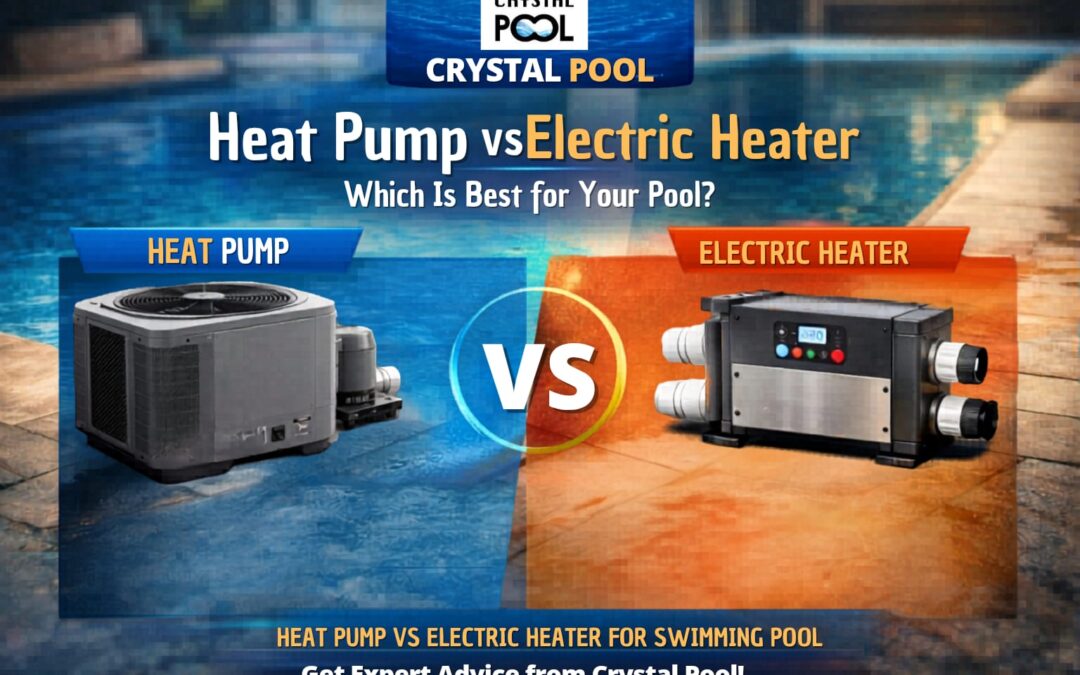
Choosing the right pool heating system is essential for comfort, efficiency, and long-term savings. Many homeowners compare heat pumps vs electric pool heaters, but the best choice depends on your climate, pool size, and budget. To help you make an informed decision, here is a clear breakdown of both options.
1. How a Pool Heat Pump Works
A pool heat pump uses surrounding air to warm the water. Instead of generating heat directly, it transfers heat from the air, which makes it significantly more energy-efficient.
As a result, heat pumps are ideal for cities like Karachi, Lahore, and Islamabad, where temperatures remain moderate for most of the year.
Key Advantages
- Uses inverter technology, making it highly energy-efficient
- Extremely low running cost
- Works best in mild to warm climates
- Long lifespan and steady performance
Limitations
- Higher upfront cost
- Slightly slower heating speed than electric heaters
2. How an Electric Pool Heater Works
An electric heater, on the other hand, uses electric resistance to generate heat instantly. It heats pool water quickly, which makes it suitable for colder regions or pools used occasionally.
Key Advantages
- Fast heating performance
- Lower upfront cost
- Doesn’t depend on outdoor temperature
Limitations
- Very high electricity consumption
- Higher operating cost
- Less energy-efficient for long-term use
3. Cost Comparison: Which One Saves More?
When comparing heat pumps vs electric pool heaters, the running cost is usually the biggest factor.
Heat Pump Costs
- Uses significantly less electricity
- Can save 60% to 80% in monthly bills
- Best for regular pool usage
Electric Heater Costs
- High wattage = higher monthly bills
- Best only for short-term or occasional heating
Because of these factors, most homeowners in Pakistan prefer heat pumps due to their cost efficiency over time.
4. Which System Is Better for Karachi or Lahore?
In cities like Karachi, where the climate is warm throughout the year, heat pumps perform at maximum efficiency.
Therefore, a heat pump is generally the better long-term choice.
5. When an Electric Heater Makes More Sense
Although heat pumps are more efficient, there are situations where an electric heater is still useful:
- You only use the pool occasionally
- You need instant heating
- You have a very small plunge pool or spa
Even then, you must consider the long-term electricity costs.
Heat Pump vs Electric Heater: Head-to-Head Comparison
| Feature | Heat Pump | Electric Heater |
| Running Cost | ★ Extremely low | ✘ Very high |
| Energy Efficiency | Uses air → heat | 100% electrical heating |
| Heating Speed | Moderate | Fast |
| Climate Suitability | Best for warm/humid areas | Works in all climates |
| Electrical Load Required | Low | Very high |
| Lifespan | 10–15 years | 4–7 years |
| Noise | Very silent | Silent |
| Best For | Daily use | Occasional quick heating |
❗Conclusion: Heat Pump vs Electric Pool Heater—Which Should You Choose?
To sum it up, a pool heat pump is the smarter, more efficient, and more cost-effective solution for most homeowners. It offers long-term savings, stable heating, and environmentally friendly performance.
However, if you need quick and occasional heating, an electric heater can still be a practical choice.
By understanding the advantages of each system, you can choose the best heating method for your swimming pool—one that fits your usage, climate, and budget.
Crystal Pool specializes in:
- Inverter pool heat pumps
- Commercial-grade heating systems
- Complete installation & plumbing
- Smart pool energy solutions
Contact us for expert sizing and recommendations tailored to your pool.
Visit our page for more heating products: https://crystalpool.pk/pool-products/swimming-pool-heaters/
Recent Comments